 Gulf Edu
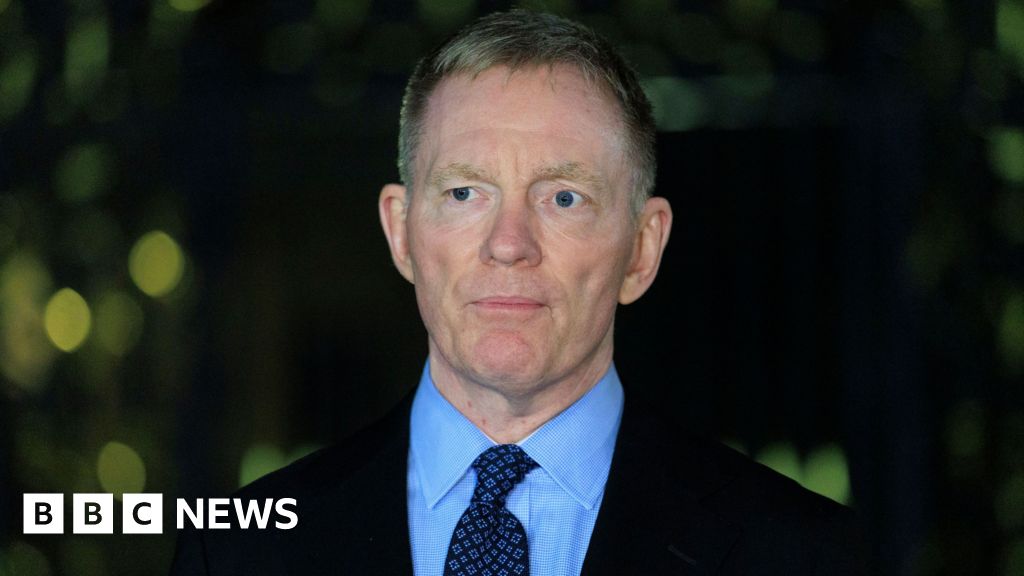
Just now Jayne McCormack Political correspondent, BBC News NI Liam McBurney/PA Media Sir Chris Bryant is believed to have asked Stormont's government to raise an additional £200m in revenue over the next two financial years The secretary of state is understood to have presented a set of conditions, including revenue raising, to be attached to any potential deal on a Stormont budget. Sir Chris Bryant is hosting separate meetings with delegations from the four parties which make up Northern Ireland Executive in a bid to break months of deadlock. His conditions are believed to include the executive committing to £200m in additional revenue raising in 2027/28 and 2028/29.
He has also asked that they should improve "discipline" around promises and delivery of pay parity to public sector workers in Northern Ireland. Seven months into this financial year the Northern Ireland Executive has still not agreed a budget. The government had offered them an additional £525m this year, but they said it still left significant gaps in managing their spending pressures, particularly delivery of pay awards for public sector workers.
It is not clear what the shape of a final budget agreement could look like, with some parties insisting there is still scope to "reprofile" some of the financial package. Delegations from Sinn Féin, the Democratic Unionist Party (DUP) and the Ulster Unionist Party (UUP) arrived separately at Hillsborough Castle on Thursday. Sinn Féin President Mary Lou McDonald said she hoped for a "productive day" while the UUP leader Jon Burrows said his party was in "deal mode".
It is understood that the top civil servants in each Stormont department have also been invited to Thursday's discussions with Sir Chris Bryant. The talks are expected to involve one-to-one meetings with delegations from each of the four executive parties. The Sinn Féin delegation included First Minister Michelle O'Neill, Finance Minister John O'Dowd and Economy Minister Caoimhe Archibald, in addition to McDonald.
The DUP contingent included its executive ministers as well as party leader Gavin Robinson and deputy leader Michelle McIlveen. The DUP did not make any remarks to the media on their way in. Burrows said the UUP wanted to strike a budget but would be telling the secretary of state Northern Ireland needs better governance.
His UUP colleague Robbie Butler said he believed negotiations were at a "pinch point". As health minister, he said that his focus was on ensuring health workers get their long-awaited pay rises. Where are the budget negotiations at?
Press Association Finance Minister John O'Dowd says he wants to ensure the prospect of strike action in the health sector was avoided Talks between the government and the executive parties have been taking place for several months now , but earlier this week O'Dowd warned that a "crunch point" is approaching. On Tuesday, the executive met again, with O'Dowd saying afterwards that he planned to present a series of options to his ministerial colleagues in the days ahead about a way forward. He did not divulge what those may be, but the government has already said no to a request from the executive to allow a larger chunk of the money in the three-year offer to be spent this year, referred to as "front-loading".
O'Dowd said all ministers needed to remain focused on the task at hand and that he wanted to ensure the prospect of strike action in the health sector was avoided. What happens in the absence of a budget? Without an agreed budget, departments face operating on emergency spending restricted to 95% of the prior year, with warnings that funds could run out by January.
That came after the government announced its first budget under Andy Burnham last week, with Northern Ireland getting an additional £270m for public services as a result, of which £131m can be used this year. Sir Chris has said that he is exploring contingency measures to allow him to pass a budget bill at Westminster, in the event that a deal cannot be reached to do so at Stormont. What have other executive ministers said?
Deputy First Minister Emma Little-Pengelly said discussions to date had been "constructive" and that the executive was in a better position now than when O'Dowd published a draft budget for consideration back in January. "The DUP rejected that - we knew it would decimate public services but there is still a significant gap, especially in terms of public sector pay," she said. "I do not believe in asking for more money and not playing our part as regards to transformation of services but everyone agrees that takes time." While Alliance's Agriculture Minister Andrew Muir said it is now "make your mind up time" for the executive.
"This needs to be resolved not in weeks or months, but days. We need to come to a final conclusion and give certainty to people who deserve proper pay but also in terms of investment in public services we need to get this done," he added. More on this story
Source: BBC